
By AI Peak Biz Team · October 15, 2026
Call to Text Routing for Local Services: Compliance and a 30 Day Pilot
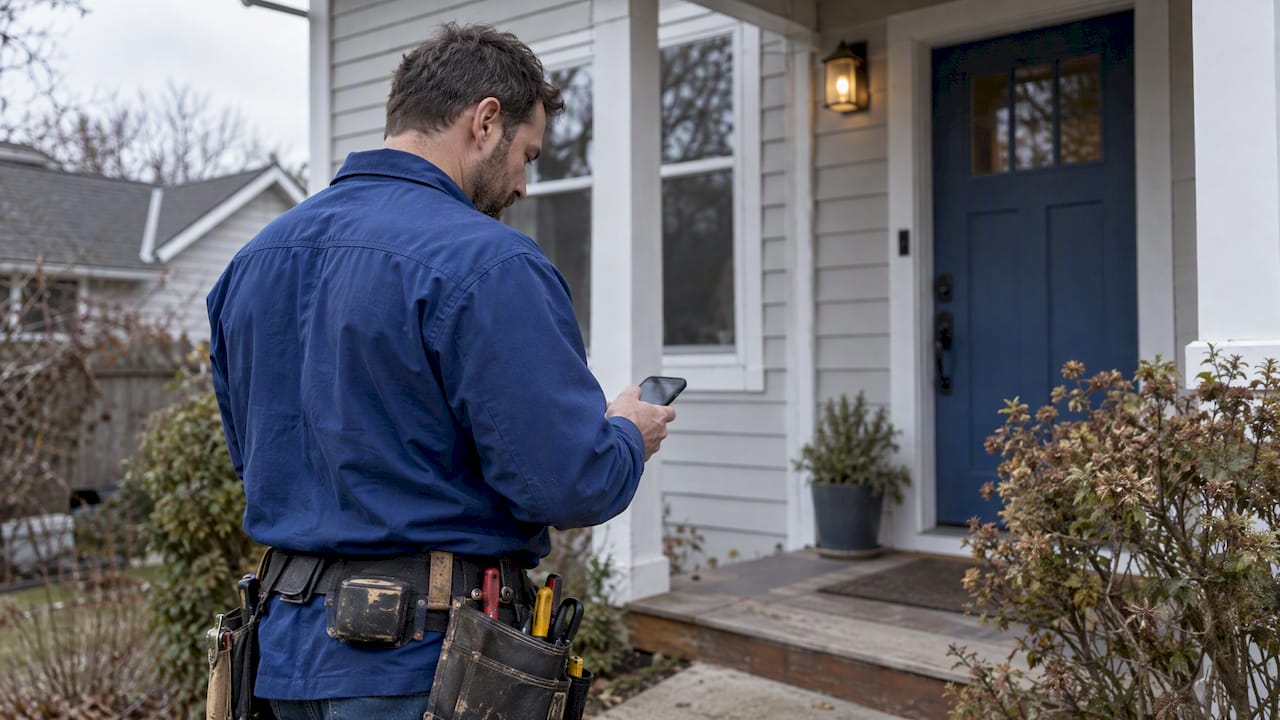
Call-to-text routing turns an unanswered business call into an immediate text follow-up, so missed callers hear from you promptly and more of them become booked jobs. Done right, it also respects the FCC and TCPA consent rules that Twilio's compliance guidance walks through. We built AI Peak Biz around this exact problem for local service businesses.
TL;DR:
- Trigger texts only after voicemail or a suitable ring threshold; firing after one or two rings can interrupt callers still waiting.
- Capture written consent for your business at the interaction, log when and how it was given, and immediately honor STOP or similar opt outs.
- Test calls across different carriers, then pilot routing on a subset; fix delivery failures, consent gaps, and triggers on answered calls before expanding.
- Compare the pilot with a recorded baseline, tracking first text time, caller replies, booked jobs, and revenue recovered from otherwise lost leads.
- Keep the follow up brief, offer one clear action, and avoid promotional language unless the caller gave express consent for it.
Table of Contents
- How does call-to-text routing work behind the scenes?
- What do TCPA and FCC rules mean for automated texts?
- How do you set up call-to-text routing step by step?
- What should a missed-call text say, and when should it go out?
- How do you measure results with a 30-day pilot?
- Why do I think this setup belongs in every service business?
- Need a turnkey way to route missed calls to text?
- Sources
How does call-to-text routing work behind the scenes?
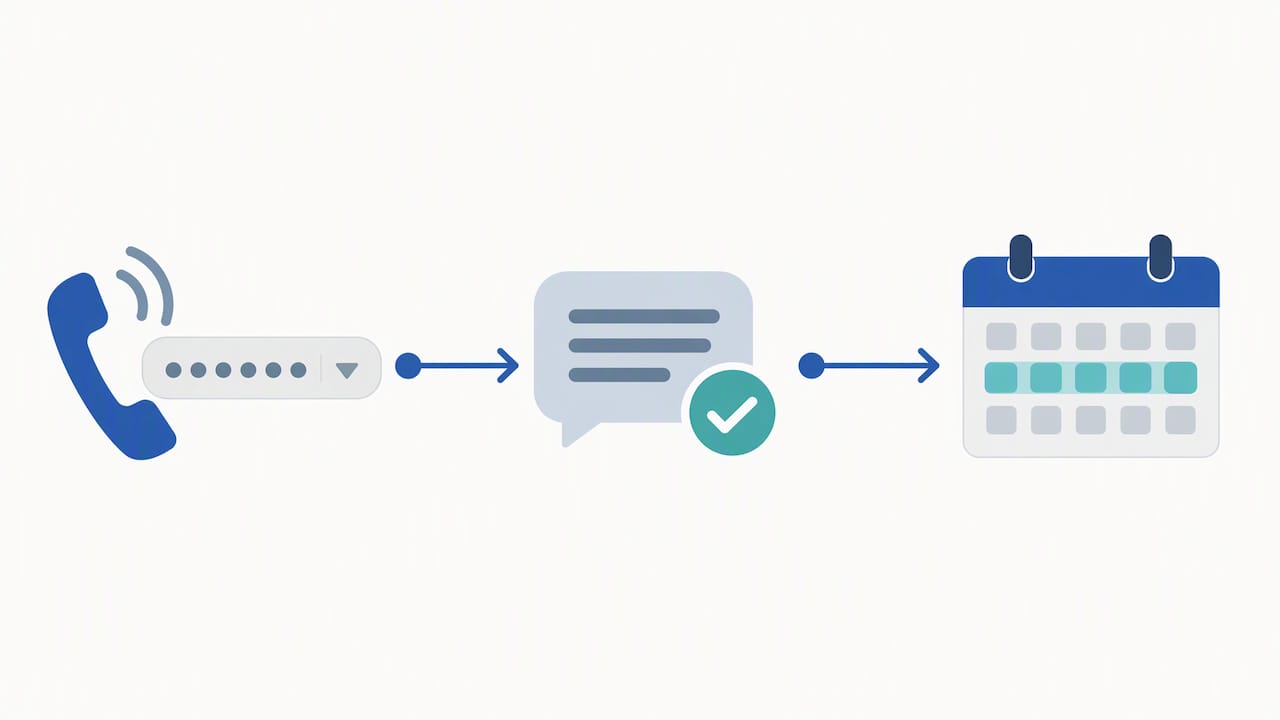
Every setup has three parts: a trigger that detects the missed call, a routing path that decides what text goes out, and the integrations that carry the conversation forward.
Trigger options
- The call reaches voicemail.
- The call goes unanswered after a set number of rings.
- Your VoIP or phone provider sends a webhook event when a call is missed.
Timing matters here. A practical approach is to trigger on voicemail or after a suitable ring threshold. Firing after one or two rings risks texting someone who is still waiting on the line, which feels pushy and wastes the first impression.
Routing paths
- An immediate automated text with a callback or booking option.
- AI-driven qualification that asks a question or two about the job.
- Human escalation, where the thread lands in a unified inbox for your office manager.
Integration points
- A business number that supports two-way SMS.
- An SMS gateway or provider API.
- Your CRM, so every missed call becomes a tracked lead.
- A calendar or booking link inside the text.
Map your current phone flow against these pieces and you will see quickly which ones you already have and which are missing.
What do TCPA and FCC rules mean for automated texts?
Automated texting is a regulated channel, and the rules are specific enough that you should design for them from day one rather than patch them in later.
Start with consent. The FCC's Second Report and Order tightens prior express written consent into a one-to-one requirement, clearly tied to the interaction where the person agreed. It also extends Do-Not-Call protections to text messages and requires terminating mobile providers to block texts once the Commission notifies them. The Federal Register's analysis of the rule notes that clearer consent rules also protect small businesses from floods of unwanted calls and texts.
Here is a working checklist:
- Capture consent at the moment of interaction, such as a web form, intake call or booking page, and tie it to your business alone.
- Honor opt-outs fast. Twilio's SMS compliance guide says consumers may use reasonable means like replying STOP, so your system should recognize it and similar words immediately.
- Keep messages purposeful. Patterns that look like spam can trigger carrier blocking and hurt deliverability for every text you send.
- Log everything: who consented, when, how, and what they agreed to. This audit trail is your protection if a question ever arises.
- Review your consent language with a qualified attorney, since your exact situation determines what applies to you.
Rule to remember: the FCC now requires consent to be one-to-one and clearly associated with the interaction where it was obtained. Source: FCC Second Report and Order
For a practical walkthrough, this SMS consent checklist is a useful companion.
How do you set up call-to-text routing step by step?
Treat setup as a short project with a test phase, not a switch you flip on a Monday morning.
- Audit your phone flow. Write down how calls arrive, who answers, where voicemail lives, and where a missed-call event could be captured.
- Choose a text-capable number. Use a business number that handles two-way SMS, then set voicemail or forwarding rules so a missed call produces an event.
- Wire up the routing. Connect that event through a webhook to your SMS gateway or platform. Decide whether a template, an AI reply or a person answers first, and route escalations to a staff inbox or your booking calendar.
- Build consent capture in. Add clear opt-in language wherever callers or web visitors first reach you, and store the records.
- Pilot before you scale. Start with a small slice of calls, watch deliverability and replies, fix what breaks, then expand.
Pro Tip: Send yourself and two staff members test calls from different carriers before launch. A text that arrives on one network and stalls on another is far cheaper to catch in testing than after losing leads.
Allow a few days for the audit and number setup, another few for message writing and consent language, and then let the pilot run. Rushing the middle steps is where most small teams stumble, because the message and the consent flow are what callers actually experience.
What should a missed-call text say, and when should it go out?
Send the text only after the call is confirmed missed, meaning voicemail was reached or your ring threshold passed. Speed still counts, so send the text promptly.
Keep the tone like a good receptionist: short, local, helpful. One clear action beats three options. Hold back marketing language unless you have express consent for it, because a follow-up to a caller who just reached out is a different thing from a promotion.
Templates to adapt:
- Voicemail alert: "Hi, this is [Business]. Sorry we missed your call. Reply here or call back at [number] and we'll help right away."
- Booking link: "Thanks for calling [Business]. Want to skip the phone tag? Pick a time that works here: [link]."
- Qualifier: "Thanks for reaching out. What kind of service do you need, and what's the address? We'll get you scheduled."
Plan the reply side too. An auto-acknowledgement confirms you got their answer, a staff handoff should carry the full thread so nobody asks the same question twice, and booking automation can close the loop without a human touch. Callers who get a fast, specific text tend to stay engaged. Callers who get a vague one tend to vanish.
How do you measure results with a 30-day pilot?
A pilot proves the value with your own numbers, which beats any benchmark you could read.
Track these core signals:
- Missed-call response time: minutes from the missed call to the first text.
- Reply rate: the share of texted callers who write back.
- Appointment conversion: booked jobs from text follow-ups.
- Recovered revenue: income from bookings that would otherwise have been lost.
Design it simply. Record your baseline missed-call count first, then enable routing on a portion of calls, and compare conversion and revenue against the period before or the calls left unrouted.
Watch for trouble spots: deliverability dips, gaps in consent records, triggers that fire on calls you actually answered, and attribution errors where a customer both texted and called back. Fix those before you trust the totals.
Why do I think this setup belongs in every service business?
Revenue leaks quietly out of service businesses, one unanswered call at a time. The owner is on a roof or under a sink, the office is covered, and the caller moves on to the next name in the search results. Text follow-up changes that story because it meets the caller in a channel they check right away.
What we deliver at AI Peak Biz reflects that: AI call and text response, lead qualification, appointment scheduling, a unified inbox, and hands-on onboarding so the system fits your business instead of the other way around. The compliance piece is the part people underestimate. A fast text that ignores consent is a liability, and a compliant one is an asset.
Need a turnkey way to route missed calls to text?
We built our platform for busy owners who want missed calls handled without running another project.

- AI call and text response that answers when you cannot.
- Lead qualification and appointment booking so replies turn into scheduled jobs.
- A unified inbox that keeps every conversation and lead in one place.
- Expert onboarding so setup is handled with you, not left to you.
Our plans are AI Website at $197 per month, Base Camp at $297, Ascent at $397 and Summit at $597, with phone and AI usage billed separately. See the plans at AI Peak Biz.
Sources
- Twilio
- DA-24-910A1.txt
- [Federal Register :: Targeting and Eliminating Unlawful Text Messages, Implementation of the Telephone Consumer Protection Act of 1991, Advanced Methods To Target and Eliminate Unlawful Robocalls](https://www.federalregister.gov/documents/2024/01/26/2023-28832/targeting-and-eliminating-unlawful-text-messages-implementation-of-the-telephone-consumer-protection?euidtkncn=)
FAQ
What is call-to-text routing in simple terms?
It is a setup that sends an automatic or managed text to a caller when you miss their call. The text offers a callback, a booking link or a quick question so the lead does not go cold. Most systems trigger it on voicemail or after a suitable ring threshold.
Do I need consent before sending a missed-call text?
Consent rules depend on the type of message and your situation, so confirm yours with a qualified attorney. The FCC requires prior express written consent to be one-to-one and tied to the interaction where it was given. Build consent capture into your intake points and keep records.
How should I handle people who reply STOP?
Honor it immediately and stop messaging that number. Twilio's guidance says people may opt out through reasonable means such as replying STOP, so your system should recognize similar phrases too. Log the opt-out so it stays respected.
How long should a pilot run before I judge results?
A pilot gives you a way to compare response time, reply rate and booked appointments against your baseline. Start with a subset of calls so you can fix issues safely. Expand once deliverability and consent records look clean.